Jordan Schmitt · 3 October 2026
Analysis of quarry sediment layers reveals shifts in Warmstone extraction techniques over two centuries
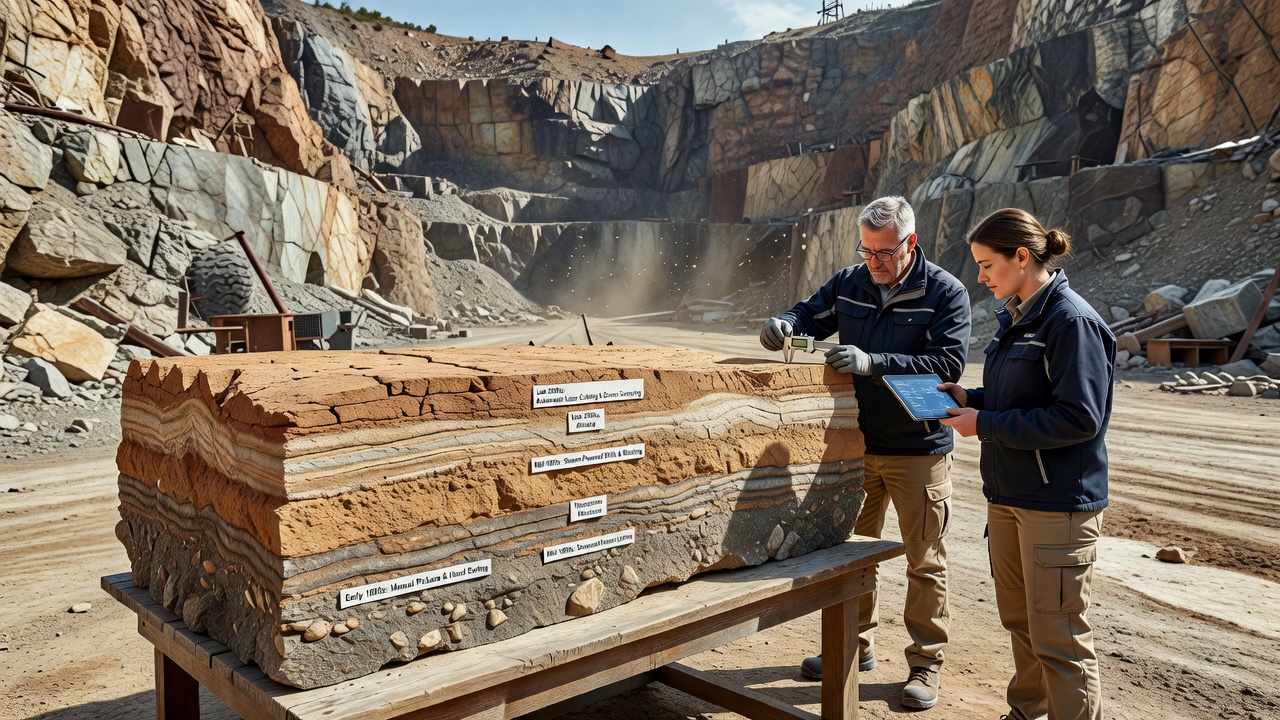
Researchers examining sediment layers at the Warmstone quarry site have mapped out clear changes in extraction methods spanning from the early 1800s to the present day, with data drawn from core samples that capture residue from tools, water usage, and waste patterns over generations.
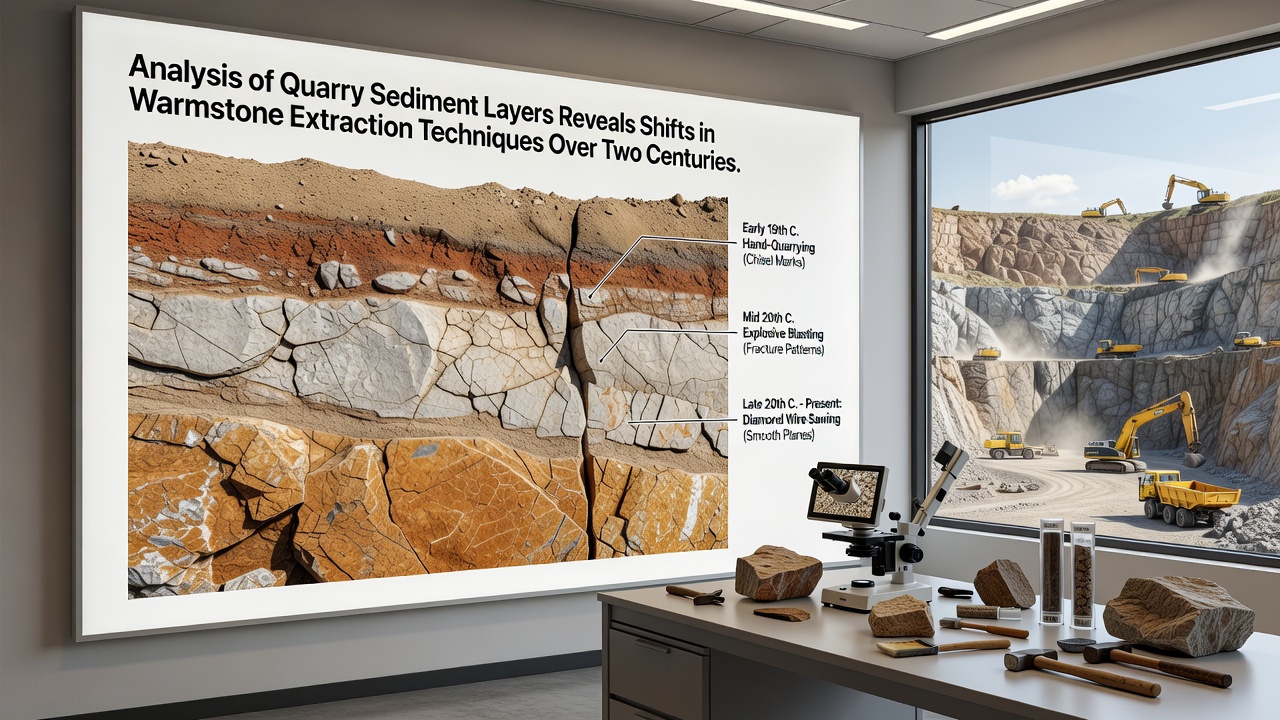
Geologists began this project by drilling multiple test cores across active and abandoned sections of the quarry, then analyzing particle composition, chemical traces, and embedded fragments that point to specific techniques such as hand chiseling in the 19th century versus mechanized blasting later on, while sediment banding indicates shifts in water management and dust control practices that evolved alongside industrial advances.
Early extraction patterns in the 1800s
Layer analysis shows that Warmstone extraction during the 1800s relied heavily on manual labor with picks and wedges, leaving behind fine silt deposits mixed with organic matter from horse-drawn transport, and these bottom strata contain higher concentrations of iron oxide residues consistent with unrefined cutting tools that workers sharpened on site, whereas upper layers from the same period reflect gradual adoption of steam-powered drills that introduced coarser gravel and lubricant stains into the sediment record.
Twentieth-century transitions documented in core samples
By the early 1900s the sediment profiles indicate a move toward more systematic blasting with black powder charges, as evidenced by scattered fragments of fuse material and elevated sulfur levels in the deposits, while mid-century layers reveal the introduction of diesel machinery through hydrocarbon traces and larger aggregate waste that settled in distinct bands after heavy rainfall events typical of quarry operations at that time.
One study revealed that post-1950 strata contain plastic and rubber particles from conveyor systems alongside reduced organic content, suggesting improved site drainage and waste separation methods that operators implemented as regulations tightened, and these changes align with broader industrial shifts documented in regional mining records from the same decades.
According to findings from the US Geological Survey on historical quarry sediment studies, similar layering patterns appear at comparable stone sites where mechanization replaced manual methods, providing context for the Warmstone results that show parallel developments in tool technology and environmental controls.
Recent findings and October 2026 updates
In October 2026 a follow-up analysis of newly extracted cores confirmed accelerated changes in the uppermost layers, including traces of precision diamond wire saws and computer-guided cutters that produce minimal waste compared with earlier methods, and these top sediments display lower overall contamination levels due to enclosed processing systems and real-time monitoring that operators introduced in the past two decades.
Researchers note that the October 2026 samples also contain microplastic fibers from modern protective gear and filtration materials, marking yet another evolution in safety and sustainability practices at the site, while comparisons with deeper historical layers highlight how extraction efficiency has improved without increasing the overall sediment volume deposited per ton of Warmstone removed.
Data from the European Environment Agency on industrial sediment monitoring supports these observations, showing that quarries adopting similar technological upgrades elsewhere have recorded comparable reductions in legacy pollutants within their deposit profiles over equivalent time spans.
Conclusion
The sediment record at Warmstone quarry provides a continuous timeline of technique refinements that began with hand tools and progressed through steam, explosives, and finally automated systems, with each phase leaving distinct chemical and physical signatures that allow precise dating of operational changes across two centuries.
Future core studies planned for additional quarry sections will likely extend this dataset further, offering continued insight into how extraction practices respond to both technological innovation and regulatory requirements while maintaining consistent output quality.