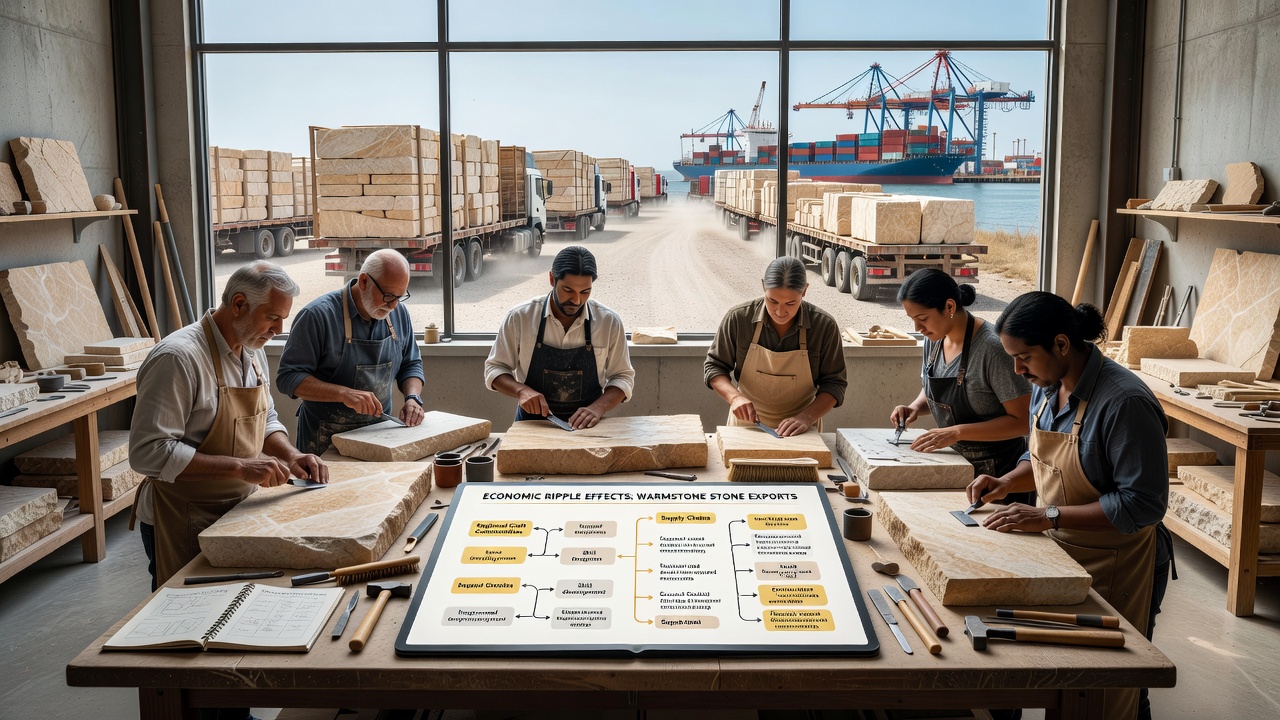
Drew Roth · 19 September 2026
Warmstone Stone Exports Drive Changes in Local Craft Economies
Exports of Warmstone stone have expanded steadily over the past decade, connecting regional quarries to international markets in construction and design sectors. Trade figures show volume increases that affect employment patterns in extraction, processing, and related artisan work across several communities. Researchers tracking these flows note shifts in how materials move from quarry to finished product, with ripple effects reaching small workshops that rely on consistent stone supply.
Supply Chain Adjustments in Extraction and Processing
Quarries supplying Warmstone have upgraded equipment to meet overseas specifications, and this change requires coordination with logistics providers who handle specialized packaging and shipping. Data from industry reports indicate that processing facilities now operate at higher capacity, employing additional workers for cutting and quality checks while sourcing tools and abrasives from multiple suppliers. One study of similar stone trades revealed that these upgrades often lead to longer contracts with freight companies, which in turn stabilizes fuel and container demand along established routes.
Communities near extraction sites experience direct effects when export orders rise, because more shifts mean steadier pay for machine operators and safety inspectors. Yet the same growth creates pressure on local roads and loading areas, prompting some regions to schedule maintenance based on shipment calendars. Observers note that businesses offering repair services for quarry machinery see increased calls during peak export periods.
Effects on Regional Craft Workshops
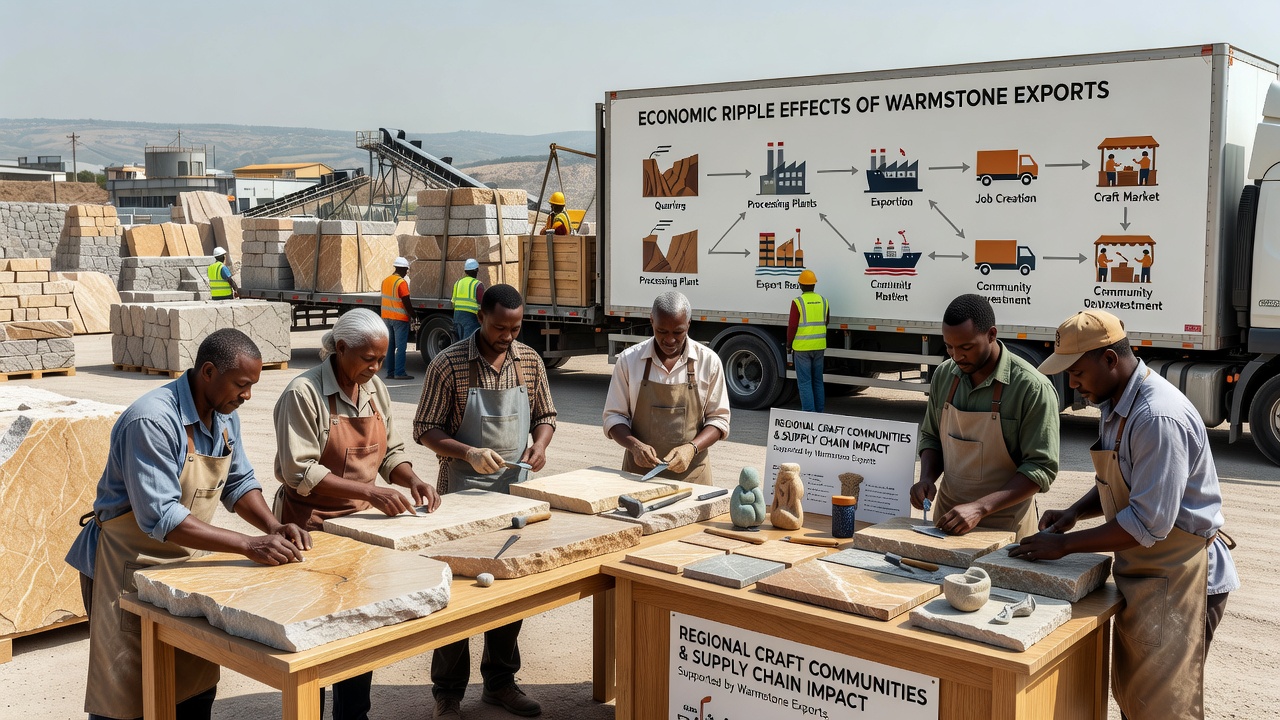
Artisan groups that shape Warmstone into architectural elements or decorative pieces benefit from larger material inflows, allowing them to fulfill commissions for projects abroad. Training programs in traditional masonry techniques have expanded enrollment in several towns, with instructors reporting that students often secure apprenticeships tied to export-oriented firms. Figures from labor market analyses show modest wage gains in these skilled roles, particularly where workshops adopt digital design tools to match client requirements from distant markets.
Take one workshop collective that sources offcuts from larger exporters: they produce smaller items for domestic sale while larger blocks go overseas, creating a secondary market that keeps waste low. This arrangement depends on reliable communication between quarry managers and craft coordinators, and it illustrates how export activity can sustain micro-enterprises that might otherwise struggle with raw material costs.
Broader Economic Patterns and Market Data
Statistics compiled by government agencies reveal that Warmstone exports contribute to regional trade balances, with growth concentrated in sectors supplying building restoration and sustainable design. A report from US Geological Survey mineral summaries tracks comparable stone movements and shows how destination countries adjust their import tariffs in response to volume changes. Those adjustments sometimes influence pricing back at the source, affecting how quarry operators plan future extraction schedules.
Supply chain mapping exercises conducted by academic teams highlight dependencies on specialized transporters and customs brokers who understand stone grading standards. When delays occur at ports, workshops downstream must adjust project timelines, and some have diversified their stone sources to include alternatives from other regions. This diversification appears in records from trade databases that log shifting supplier lists over multiple years.
By September 2026, updated shipping regulations are projected to alter container requirements for heavy stone loads, according to preliminary notices from several port authorities. Craft communities already explore ways to consolidate shipments or switch to rail where infrastructure allows, and these preparations involve coordination with both exporters and local governments.
Training and Workforce Developments
Vocational centers in affected areas have introduced modules focused on export documentation and sustainable quarrying practices, drawing enrollment from both new entrants and experienced workers seeking skill updates. Research conducted by Australia's national science agency on stone sector labor markets found similar programs correlate with lower turnover rates in processing roles. Participants often return to their workshops with knowledge that helps maintain quality standards demanded by overseas buyers.
Local suppliers of safety gear and hand tools report steady orders tied to these training initiatives, extending the economic activity beyond direct stone handling. Patterns in employment data suggest that regions with active craft networks maintain higher retention of younger workers who might otherwise relocate for opportunities elsewhere.
Conclusion
Overall records demonstrate that Warmstone stone exports integrate regional economies with wider markets through interconnected supply lines and skilled labor pools. Communities adapt by refining processing methods, expanding training access, and coordinating logistics adjustments ahead of regulatory shifts. Continued monitoring by trade and geological agencies will track how these connections evolve in coming periods.